Among the many natural remedies passed down through centuries, colloidal silver remains one of the most debated. While widely referenced for its “antimicrobial” properties, its classification as a true bactericide has become a subject of confusion and controversy. We aim to clarify what is meant by the antibacterial properties of colloidal silver, how it may (or may not) affect different bacterial conditions, and why scientific terminology matters when evaluating claims.
What Does “Antibacterial” Mean?
The term antibacterial simply refers to the ability to inhibit or kill bacteria. However, not all antibacterial agents work the same way. Some are bacteriostatic, meaning they stop bacteria from multiplying. Others are bactericidal, meaning they kill bacteria directly. In laboratory settings, silver ions have demonstrated bactericidal effects, but translating these effects into the human body is complex and less conclusive.
The Problem with the Term “Bactericide”
Colloidal silver is often misrepresented as a universal bactericide. This may stem from in vitro studies that show silver disrupting bacterial membranes and interfering with DNA replication. However, the body is not a petri dish. The presence of proteins, organic matter, and other physiological barriers can reduce silver’s effectiveness. Furthermore, forms of silver vary widely—from ionic to colloidal to silver protein—and their effects are not equivalent.
What Kind of Silver Are We Talking About?
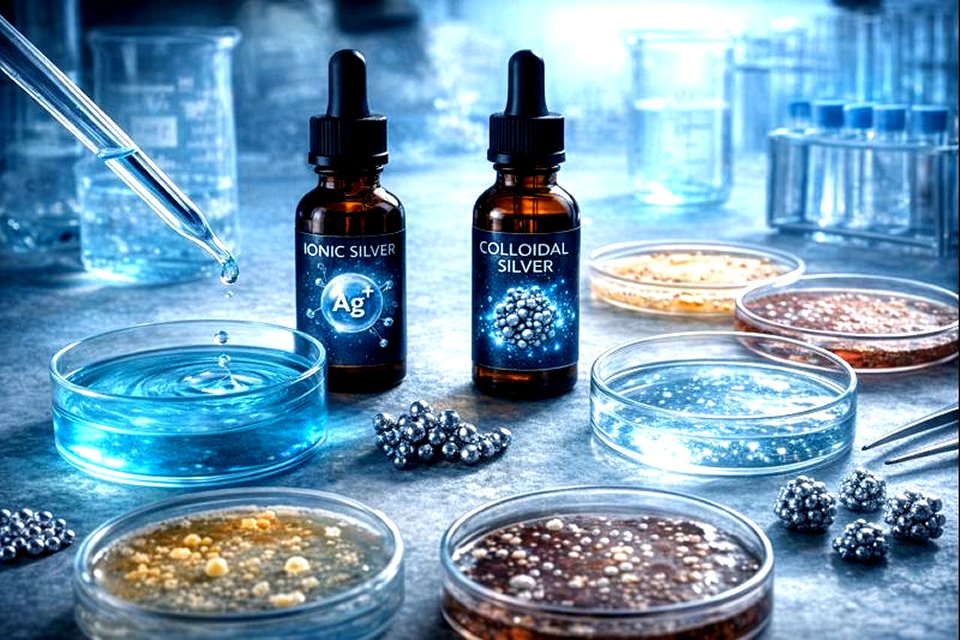
There are three main types commonly referred to as “colloidal silver,” though only one fits the true definition:
- Wayne Rowland Silver Water: High-voltage nanoparticle silver created using Tesla lightning and infused with Rife healing frequencies simultaneously during the manufacturing process. 3 PPM, the smallest particle size known, comparable to 10 PPM TCS, with no toxicity.
- True Colloidal Silver (TCS): Composed primarily of silver nanoparticles suspended in distilled water. Rare and stable, it is considered more bioavailable in its particulate form.
- Ionic Silver: A solution containing mostly silver ions (Ag+), often clear in appearance, and the most common form made at home. Easily reacts with chloride in the body, which may reduce efficacy.
- Silver Protein: Large silver particles bound to protein molecules. Due to particle size and instability, this type is widely considered the least effective and is often excluded from serious discussions about colloidal silver.
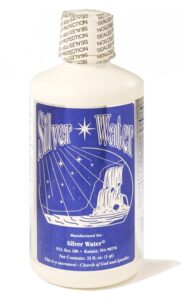
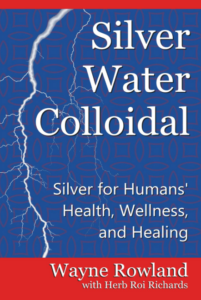
Wayne Rowland documents extraordinary anecdotal results by using his Silver Water related to bacterial issues, notably including (but not limited to) Abscesses, Bacterial infections, Bacterial vaginosis, Biofilm disruption, Bladder infections, Blood infections, Bone infections, Bubonic plague, Cellulitis, Cholera, E. coli infection, Ear infections, Escherichia coli, Eye infections, Eye sties, Gonorrhea, Helicobacter pylori, Kidney infections, Listeria, Lyme disease, Lymphangitis, Meningitis, MRSA, Pink eye (conjunctivitis), Pneumonia, Sepsis, Septicemia, Sore throat, Staph infections, Strep throat, Syphilis, Tetanus, Tuberculosis, Urinary tract infection (UTI), Vaginal infections. Whooping cough, among others.
Note: Due to its instability and limited potential, silver protein is not included in the table below.
How Silver Interacts with Bacteria Silver may affect bacteria through several mechanisms:
- Disrupting bacterial cell membranes
- Interfering with enzyme function
- Generating reactive oxygen species
- Binding to and disrupting DNA
The effectiveness of these mechanisms may depend on the type of bacteria involved:
- Gram-positive bacteria: Have thick peptidoglycan cell walls but are generally more penetrable to silver particles.
- Gram-negative bacteria: Have thinner cell walls but possess an outer membrane, which can make them more resistant.
- Anaerobic bacteria: Thrive in oxygen-free environments, often associated with gum disease and abscesses.
- Biofilm-forming bacteria: Produce a protective matrix that can resist both antibiotics and natural substances, but some reports suggest silver ions may help disrupt these.
Claimed Bacterial Uses vs. Type vs. Silver Form Efficacy
| Malady | Bacterial Type | Silver Water | Ionic Silver | True Colloidal Silver | Notes |
| MRSA | Gram-positive | ✅ High | ⚠️ Moderate | ✅ High | Particle form may penetrate better. |
| E. coli infection | Gram-negative | ✅ High | ✅ High | ⚠️ Moderate | Ag⁺ ions may breach outer membrane. |
| Staph infections | Gram-positive | ✅ High | ⚠️ Moderate | ✅ High | Biofilm presence may affect results. |
| Gonorrhea | Gram-negative | ✅ High | ✅ High | ⚠️ Limited | Ionic form historically used topically. |
| Lyme disease | Mixed/Biofilm | ✅ High | ⚠️ Moderate | ✅ Possibly | Anecdotal biofilm disruption claims. |
| UTI | Gram-negative | ✅ High | ✅ High | ⚠️ Moderate | Depends on delivery method. |
| Pink Eye | Gram-negative | ✅ High | ✅ Topical use | ⚠️ Limited | Often drops with Ag⁺ used in past. |
| Dental abscess | Anaerobic | ✅ High | ⚠️ Low | ✅ Possibly | Localized application key. |
| Sepsis | Mixed | ✅ High | ⚠️ Limited | ⚠️ Limited | No evidence for safe systemic use. |
| Pneumonia | Gram-positive | ✅ High | ⚠️ Some use | ⚠️ Limited | Used via nebulizer in folk practice. |
| Syphilis | Gram-negative | ✅ High | ✅ Historic topical | ❓ Unknown | Used before antibiotics. |
| Meningitis | Gram-negative | ✅ High | ⚠️ Caution | ⚠️ Limited | Medical emergency, not recommended. |
| Strep throat | Gram-positive | ✅ High | ✅ Gargle | ⚠️ Limited | Ionic rinse reportedly common. |
| Tetanus | Gram-positive | ✅ High | ⚠️ Historic use | ⚠️ Limited | Prevention, not treatment. |
| Tuberculosis | Gram-positive | ✅ High | ⚠️ Experimental | ⚠️ Experimental | Aerosol delivery anecdotal only. |
| Leprosy | Gram-positive | ⚠️ Limited | ⚠️ Historical | ⚠️ Unknown | Colonial-era use in limited cases. |
| Cholera | Gram-negative | ⚠️ Limited | ✅ Some reports | ⚠️ Limited | 19th-century silver salts used. |
| Biofilm disruption | Mixed/Biofilm | ✅ High | ✅ Possible | ✅ Possible | Dependent on exposure and time. |
| Blood infections | Mixed | ✅ High | ⚠️ Dangerous | ⚠️ Dangerous | Not safe for systemic emergency use. |
✅ = theorized or historically claimed effective
⚠️ = mixed or anecdotal, unclear
❌ = not advised
❓ = not enough data
Colloidal silver has long been referenced for its antibacterial properties, but the confusion arises when broad claims are made without specifying the form of silver, the type of bacteria, or the method of use. Scientific accuracy and responsible communication are key in separating myth from meaningful research.
While anecdotal reports continue to circulate, especially from historical and pre-antibiotic sources, the modern scientific consensus urges caution, especially with internal use. That said, many individuals and researchers remain curious about silver’s potential and continue to explore its applications in carefully controlled environments.
Important Notice: This article is intended for educational and research purposes only. It does not make any medical claims regarding colloidal silver. The statements above represent anecdotal, historical, or theoretical perspectives and should not be interpreted as conclusive medical evidence. Always consult with a qualified health professional regarding personal health decisions.